Bogota is a sprawling metropolis pulsing with a unique energy, where colonial history seamlessly blends with the fast-paced life of a modern cosmopolitan capital. If you’re wondering what is the capital of Colombia, look no further than this vibrant city nestled in the heart of the Andes. When visiting Bogota Colombia, travelers find a city of fascinating contrasts: from the cobblestone streets of La Candelaria to the cutting-edge skyscrapers of the north, all sitting under the watchful eye of the eastern mountains.
This city is far more than just the country’s administrative hub; it’s a cultural laboratory where every region of this Colombian city converges. The capital offers a vibrant mix of world-class museums, an elite culinary scene, and the very best tourist attractions in Bogota. This guide is designed to help you make the most of your visit to the “Athens of South America,” exploring the best things to do in Bogota Colombia, and ensuring your stay in the high-altitude savanna is both unforgettable and enriching.
Bogota: Your Gateway to a Land of Wonders
For many international travelers, the first question before landing is whether Bogota is the capital of a country as biodiverse as Colombia. The answer is a resounding yes. Bogota is the cultural and geographical heartbeat of the nation. When searching for the capital of Colombia in Spanish, you’ll realize it represents the economic engine of the country. El Dorado International Airport, one of South America’s most important hubs, makes it easy for those looking for what to see in Bogota Colombia to get here.
A key factor for any traveler is the altitude of Bogota. Sitting at 8,660 feet (2,600 meters) above sea level, the climate is crisp and the air is thin. This altitude influences everything—from the way food is cooked (water boils at a lower temperature) to the physical performance of athletes—giving the city an “eternal spring” vibe with a refreshing Andean chill. It’s common to feel a bit tired on your first day, but nothing a world-class Colombian coffee can’t fix.
Living History: A Journey to the City’s Roots
Walking through downtown is like stepping back in time. The historic center is the core where Colombia’s independence was forged and where the most valuable treasures of Bogota tourism are kept.
La Candelaria Neighborhood and Bolivar Square
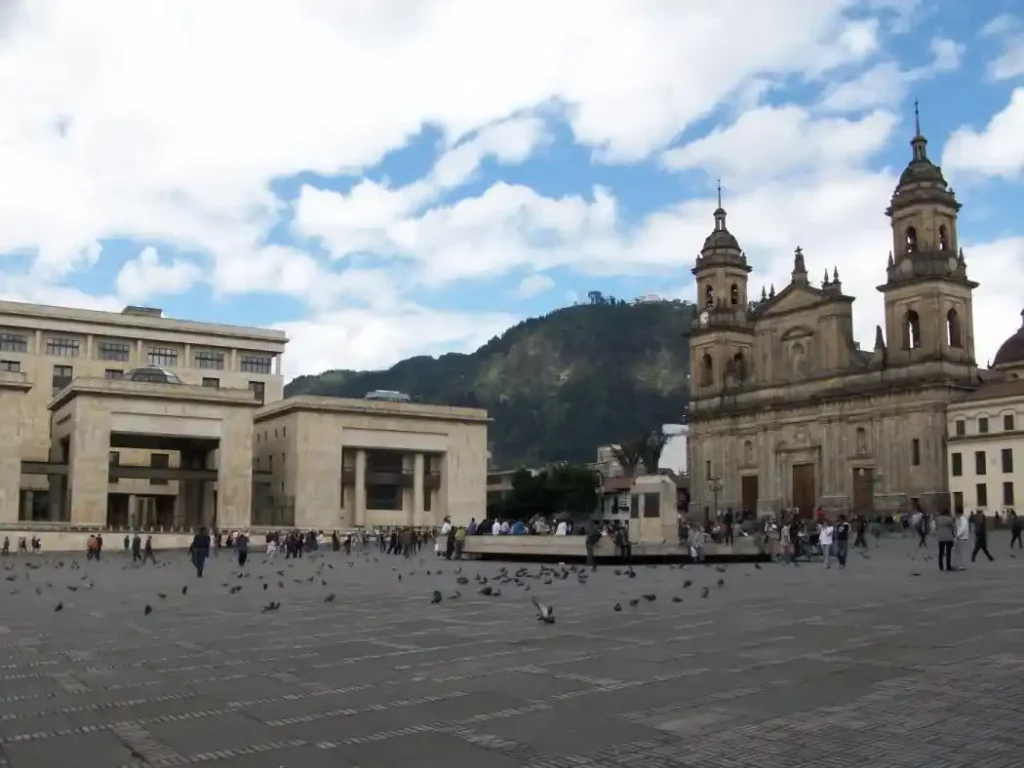
The La Candelaria neighborhood is the epicenter of the city’s colonial past. Its cobblestone streets, lined with vibrantly colored houses and carved wooden balconies, are home to legends of ghosts and poets. While exploring Bogota La Candelaria, you’ll eventually find yourself in Bolivar Square (Plaza de Bolívar). This is the political heart of the nation, surrounded by the National Capitol, the Palace of Justice, and the Primary Cathedral of Colombia a 19th-century architectural masterpiece. It is, without a doubt, one of the most photographed and historically significant places to visit in Bogota.
Nearby, you’ll find the Chorro de Quevedo Square, a bohemian corner filled with storytellers and street performers where the city was reportedly founded in 1538. For lovers of religious art and history, the Santa Clara Museum is a must-see; this former church turned museum is one of the most decorated and beautiful colonial temples on the continent, with walls covered in paintings and wood carvings gilded in gold leaf.
The Gold Museum and the Legend of El Dorado
A mandatory stop to understand Colombian identity is the Gold Museum (Museo del Oro). Here, the famous Legend of El Dorado is explained in detail the myth that drove European conquistadors to explore these lands in search of a city made of gold. The museum houses the famous Muisca Raft, a masterpiece of goldsmithing representing the sacred ritual where a new chief would cover himself in gold dust and plunge into the waters of Andean lagoons. Seeing these pieces up close is the only way to truly appreciate the craftsmanship of the indigenous peoples.
High-Altitude Experiences and Urban Lookouts
Bogota is best enjoyed from above, where the urban sprawl meets the deep green of the mountains.
Monserrate Hill: The City’s Balcony
Monserrate Hill is the quintessential symbol of the capital. Rising to 10,341 feet (3,150 meters), it offers the most spectacular view of the Bogota savanna. You can head up via cable car or funicular to visit the white sanctuary, home to the “Fallen Lord.” It’s one of the top activities in Bogota tourism, perfect for watching the sunset as the city lights up like a sea of embers. At the summit, you’ll also find fine-dining restaurants where you can enjoy hot chocolate with cheese—a true Bogota tradition.
Colpatria Tower Lookout
For a more urban, central perspective, the Colpatria Tower lookout is ideal. Located in the international center, this tower was for decades the tallest building in the country. From the top, you can appreciate the city’s grid design, the non-stop movement of Carrera Séptima, and the sleek skyscrapers of the financial district. It’s especially striking during the Christmas season when the tower is bathed in colorful LED light shows.
Style, Parks, and Culture
The city is divided into sectors that reflect its cultural diversity and its love for public spaces and fine dining.
The Parkway and the Lourdes Basilica
The Parkway, located in the traditional La Soledad neighborhood, is a boulevard lined with century-old trees, independent bookstores, artisan cafes, and small theaters. It’s a favorite spot for intellectuals and artists to take a quiet, bohemian stroll. Near this area, in the vibrant Chapinero district, stands the Our Lady of Lourdes Basilica (Bogota). With its Gothic-Moorish architecture, massive stained-glass windows, and central plaza, it’s a spiritual and architectural landmark you can’t miss if you want to see the European influence on the capital.
Bogota’s Zona G and the Zona Rosa
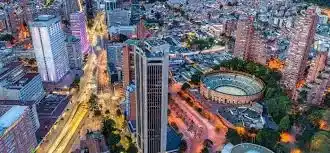
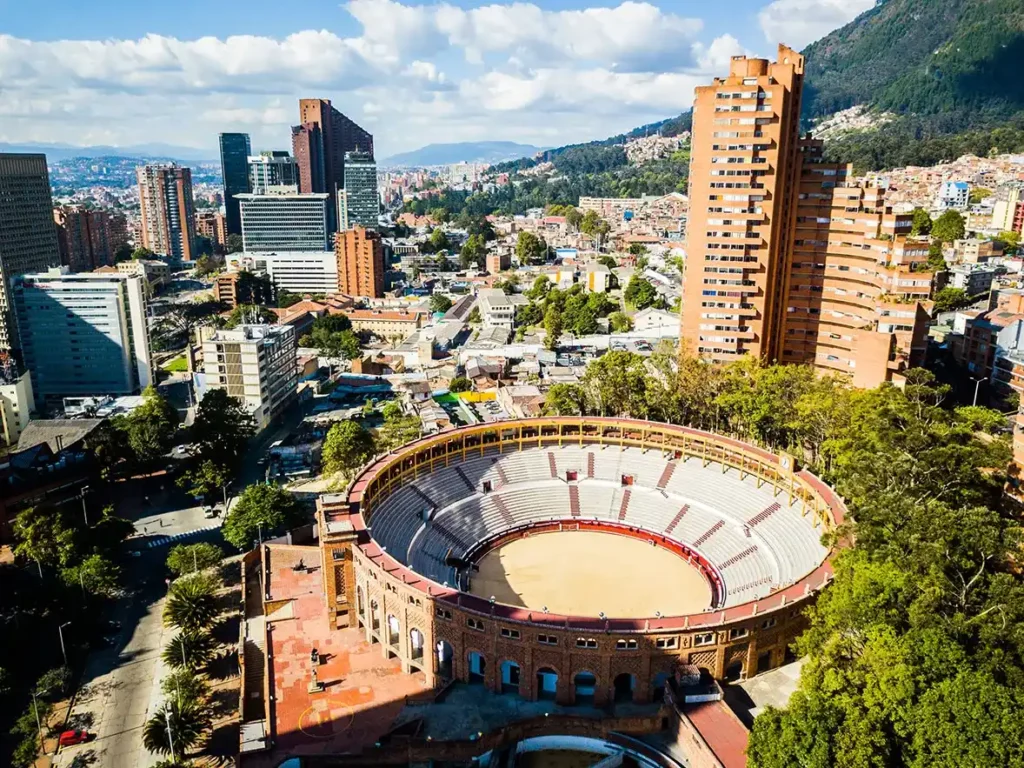
If you’re looking for exclusivity and international flavors, Bogota’s Zona G offers the city’s best dining, with restaurants frequently appearing on world-class lists. For nightlife, the Bogota Zona Rosa (also known as Zona T) is the place to be; it’s a pedestrian-friendly area packed with luxury shopping malls and nightclubs where the party doesn’t stop until dawn. Near these areas lies the iconic Bogota Bullring (Plaza Cultural La Santamaría), a Moorish-style brick structure that now serves as a major venue for cultural events and concerts.
Parks and Recreation: From Usaquen to Timiza Park
Usaquen Bogota is famous for its old-town feel despite being absorbed by the city. Its cobblestone streets host the most famous Sunday flea market in town, where you can buy everything from single-origin coffee to fine emerald jewelry. For those looking for a more local vibe, Timiza Park in the south of the city features a large lake for boating, wide green spaces, and sports facilities that reflect the daily family life of Bogotanos far from the usual tourist trails.
Urban Art and the Alternative Scene: The City as a Canvas
It’s not all ancient history; Bogota is globally recognized today as one of the world capitals of street art and graffiti.
Bogota Graffiti Tour
The Bogota Graffiti Tour is one of the most popular and highly-rated experiences for international visitors. Walking through the walls of the historic center and along major avenues, expert guides explain the political, social, and cultural context behind the murals. You’ll see works by collectives like Toxicómano or individual artists who have turned Bogota into an open-air gallery that critiques power and celebrates the country’s biodiversity.
Underground Wonders and Adventure in Cundinamarca
The areas surrounding Bogota hold secrets deep underground and pure adrenaline in the nearby mountains and rivers.
Zipaquira and Nemocon: The World of Salt
The Zipaquira Salt Cathedral is world-famous as the “First Wonder of Colombia.” It is a stunning salt church built within the tunnels of a salt mine 590 feet (180 meters) underground. Its Stations of the Cross carved directly into the rock are breathtaking. However, for a more intimate experience, you should visit Nemocon. Its salt mines, featuring natural mirrors of water that reflect the lights and crystallization chambers, have been the backdrop for international films (like The 33) and offer a magical journey into the earth. Both destinations in Zipaquira and its surroundings are essential for understanding the region’s mining heritage.
Extreme Sports in Cundinamarca and Nature
For thrill-seekers, the options for extreme sports in Cundinamarca are endless. You can go paragliding in Sopó with views over the savanna, or try rock climbing at the Suesca cliffs, the birthplace of mountaineering in Colombia. If you prefer pure hiking, Chingaza National Natural Park and the Guatavita Lake offer paramo landscapes found nowhere else on earth, where mist and water create a mystical atmosphere tied directly to the Legend of El Dorado.
Recommended for you: Rincón del Mar, Sucre: How to Get There, What to Do, and Where to Stay
Frequently Asked Questions about the Capital of Colombia
What is the capital of Colombia?
Bogota, a metropolis located at 8,660 feet in the Eastern Andes.
What is the main attraction in Zipaquira?
Without a doubt, the Zipaquira Salt Cathedral, a massive underground salt church unlike anything else in the world.
What’s the weather like given the altitude of Bogota?
It’s a temperate mountain climate, with an average temperature of 57°F (14°C). It can rain at any time, so dressing in layers is highly recommended.
What does the Bogota Graffiti Tour cover?
It covers the history of the art movement, spray techniques, and the stories of social resistance behind the most famous murals.
What is there to see at Bolivar Square?
The Primary Cathedral, the Palace of Justice, the National Capitol, and the Liévano Palace (City Hall).
Is it better to visit the Salt Cathedral or the Nemocon mines?
Zipaquira is larger and more monumental; Nemocon feels more authentic and is visually poetic thanks to its mirrors of water.
Where is the Colpatria Tower lookout located?
On Carrera 7 and Calle 26, the point where the historic center meets the international district.
What extreme sports in Cundinamarca are recommended?
Paragliding in Guatavita or Sopó, whitewater rafting on the Rio Negro, and rock climbing in Suesca are the top picks.
What are the hours for Monserrate Hill?
It usually opens around 6:30 AM. It’s best to go early to beat the crowds or at sunset to see the city lights.
What should I check out at the Parkway?
It’s perfect for visiting small independent bookstores like Casa Tomada, enjoying specialty coffee, and appreciating mid-20th-century architecture.
Bogota is a city that rewards those who explore it with curiosity and an open mind. From the mystery of the Legend of El Dorado at Guatavita Lake to the vibrant modernity of the Zona Rosa, this Colombian city has something for every type of traveler. Whether you’re looking for faith in a salt church, adrenaline with extreme sports in Cundinamarca, or alternative culture on a Bogota Graffiti Tour, the capital will welcome you with its crisp mountain air, world-class food, and a Bogota tourism scene that never seems to end.
Ready to find out what is the capital of Colombia for yourself? Start planning your route through the city’s top sights, from the summit of Monserrate Hill to the depths of the Nemocon mines, and let yourself be surprised by the unexpected magic of Bogota. Your unforgettable journey begins today!